The CEO Travel Security Checklist: Before You Leave, While Traveling and After Arrival
CEO travel security is the planning and support that keeps a senior executive safe, healthy, connected and productive while away from home. Travel is when executives are most exposed: schedules are public or easy to infer, environments are unfamiliar, transitions between airports, vehicles, hotels and venues create gaps, and the usual support systems of the office and home are far away.
The good news is that most travel risks are manageable with preparation. A practical CEO travel security plan covers three phases. Before you leave, assess the destination, protect your itinerary and arrange trusted transportation, accommodation and medical support. While traveling, keep your profile low, your devices secure and your team informed. After arrival, confirm that local arrangements match the plan, stay alert to changes and know how you would respond to a medical issue or disruption.
This checklist is written for CEOs, founders, investors and the assistants and chiefs of staff who plan their travel. It focuses on decisions and preparation rather than tactics, and it scales from a routine domestic trip to an international itinerary that may need full executive protection.
Why Executive Travel Needs Its Own Plan
Many organisations have strong security at headquarters but very little once their leaders leave the building. Yet the risks executives face while traveling are often greater than in the office:
- Predictability: conference agendas, speaking slots and dinners are often published.
- Unfamiliarity: new cities, languages, laws, driving conditions and emergency services.
- Transitions: moving between aircraft, terminals, vehicles, hotels and venues.
- Fatigue: long flights and packed schedules reduce awareness and judgement.
- Information exposure: devices, documents and conversations carried into less controlled environments.
- Health: medical issues are far more complicated far from home.
A travel security plan does not have to be complicated. It has to be deliberate, proportionate and shared with the people who need it.
Phase 1: Before You Leave
Assess the destination
- Review the current risk picture for each city: crime trends affecting business travellers, civil unrest, protests, natural hazards, health advisories and any government travel advice.
- Check for events during your visit: elections, large demonstrations, major sporting or cultural events and public holidays can all affect movement and availability.
- Understand local laws and customs that may affect you, including rules on data, photography, medications and business conduct.
- Confirm entry requirements: passport validity, visas, vaccinations and any documentation for travelling family members.
Assess your own profile
- Consider your visibility: are you speaking, appearing in media or attending a publicised event?
- Consider your company's situation: layoffs, litigation, controversial decisions, major transactions or activist attention can increase interest in you.
- Review online exposure: is your travel being discussed publicly? Are personal details, such as family information or home addresses, easy to find?
- Decide on the level of support you need, from basic planning to a protection professional or a full executive protection program. A professional threat and risk assessment helps make this decision objectively.
Protect the itinerary
- Limit who knows exact details such as flight times, hotel names and room numbers.
- Avoid posting live travel updates on social media, and ask colleagues and family to do the same.
- Coordinate with event organisers on what is published about your arrival, speaking slot and movements.
- Keep a master itinerary with a small, trusted group: your assistant, security lead and a contact at home.
Arrange trusted transportation
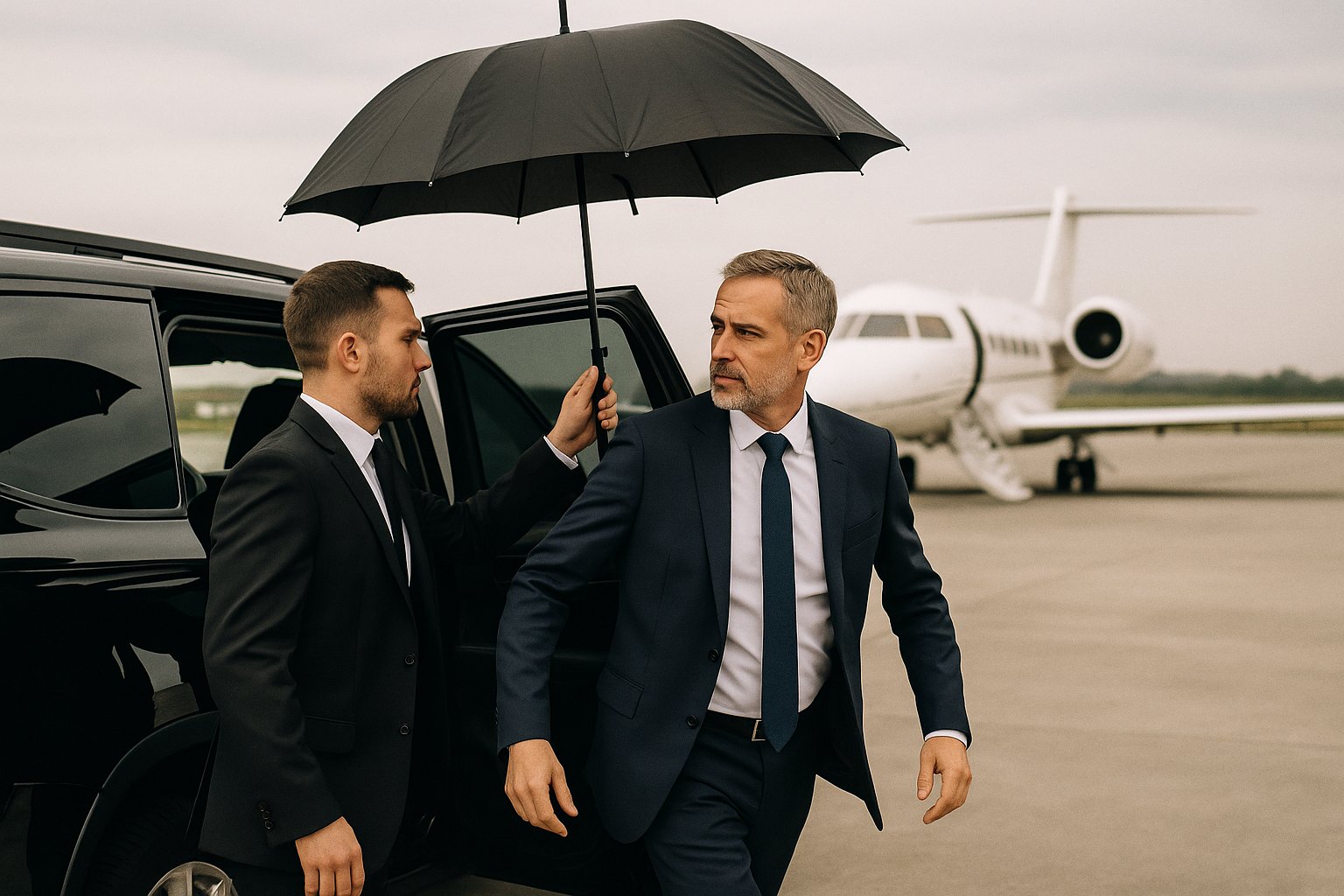
- Pre-book vetted ground transportation rather than relying on street taxis or unverified ride services in unfamiliar cities.
- Confirm driver identity and pickup procedures in advance, and avoid displaying your full name on airport signs.
- Consider a trained protective driver for higher-profile trips, and armored vehicles only where the risk genuinely justifies them.
- If flying privately, coordinate arrival details between your aviation team, the private terminal and ground transportation. Our guide to private jet security covers this in detail.
Choose and prepare accommodation
- Select reputable hotels with professional security and controlled access.
- Register discreetly where possible and ask the hotel not to disclose your presence or room number.
- Coordinate with hotel security for higher-profile stays, including arrival arrangements and how visitors and deliveries will be handled.
- Review private residence rentals carefully; they offer privacy but often lack the security and support of a quality hotel.
Plan for medical needs
- Identify appropriate hospitals and clinics near your hotel and key venues.
- Carry sufficient prescription medication in original packaging, with documentation, and check local rules for controlled medicines.
- Confirm medical and evacuation coverage through insurance or a medical assistance provider.
- Share relevant medical information with your security lead or a trusted travelling companion.
Prepare devices and information
- Travel with only the data you need. Some organisations issue clean travel devices for higher-risk destinations.
- Update software and enable strong authentication on all devices and accounts.
- Use encrypted communications for sensitive conversations and documents.
- Back up important information before you leave.
Build a communications and contingency plan
- Agree check-in arrangements with your office or security lead.
- Store emergency contacts: your security lead, local providers, embassy or consulate, medical assistance and insurer.
- Keep copies of key documents stored securely and separately from the originals.
- Agree what happens if plans change: flight cancellations, venue changes, illness or local disruption.
Phase 2: While Traveling
At the airport and on the move
- Keep a low profile. Avoid conspicuous luggage tags, branded materials and loud business conversations in public areas.
- Keep devices and documents with you, and use privacy screens on laptops.
- Be cautious on public Wi-Fi; use trusted connections or a secure VPN.
- Stay with your travelling party during transitions and confirm your driver before getting into any vehicle.
- Manage fatigue: rest on longer flights and avoid scheduling critical meetings immediately after arrival where possible.
Protect conversations and information
- Treat public spaces as public: aircraft cabins, lounges, hotel lobbies, restaurants and vehicles with unfamiliar drivers.
- Be careful with printed documents and never leave them in hotel rooms or cars.
- Be alert to social engineering, such as unexpected requests, urgent messages or unfamiliar people seeking information about your schedule.
Stay connected to your team
- Keep check-ins simple and consistent.
- Share schedule changes with your security lead and driver promptly.
- Monitor local news and alerts, or have someone do it for you.
Phase 3: After Arrival
Confirm arrangements
- Verify transportation, hotel and meeting arrangements match the plan.
- Familiarise yourself with your hotel: exits, reception, security contacts and how to reach help at any hour.
- Confirm meeting and event logistics: entrances, hosts, timings and who is expected to attend.
Manage your daily routine
- Avoid unnecessary predictability, such as identical daily habits that are easy to observe.
- Use trusted transportation for all movements, including short evening trips.
- Be thoughtful about social invitations from people you do not know well, especially in unfamiliar settings.
- Moderate alcohol at business dinners and receptions, particularly abroad.
At conferences and investor dinners
- Coordinate arrival and departure with organisers so you are not waiting in public areas.
- Use green rooms and private spaces between appearances where available.
- Manage approaches politely; a protection professional or team member can help when necessary.
- Leave on your own schedule rather than with large crowds where possible.
Respond to changes
- Reassess if conditions change: protests, incidents, weather or unexpected attention.
- Be willing to adjust movements, venues or timing.
- Escalate early to your security lead rather than waiting to see what happens.
After the trip
- Debrief briefly: what worked, what did not and what should change next time.
- Review devices if they were used in higher-risk environments.
- Update your travel profile with trusted providers, hotels and contacts for future visits.
When to Add Executive Protection
Many trips need nothing more than good planning and trusted providers. Professional executive protection becomes appropriate when:
- You have received threats or are the subject of hostile attention.
- You are traveling to a destination with elevated crime, unrest or kidnap risk.
- You are highly recognisable or appearing at a publicised event.
- Your family is traveling with you.
- Your itinerary is complex, multi-city or tightly scheduled.
- You are carrying out sensitive business, such as major transactions or negotiations.
Protection can scale from a single professional during a conference appearance to a full program with advance work, secure transportation, intelligence monitoring and medical contingency planning. For a deeper explanation, see our complete guide to executive protection and our pricing guide.
Common Executive Travel Mistakes
- Publishing travel in real time on social media or company channels.
- Using unverified transportation in unfamiliar cities.
- Displaying full names on airport pickup signs.
- Carrying unnecessary sensitive data on devices.
- Ignoring medical planning until something happens.
- Leaving family members out of the plan.
- Assuming the event organiser's security covers you personally. Event security protects the event; it does not necessarily protect individual attendees.
The Quick-Reference Checklist
Before you leave:
- Destination risk reviewed and local events checked.
- Personal profile and online exposure considered.
- Level of protection decided.
- Itinerary shared only with a trusted group.
- Vetted transportation and accommodation booked.
- Medical facilities identified and coverage confirmed.
- Devices updated, secured and limited to necessary data.
- Communications and contingency plan agreed.
While traveling:
- Low profile maintained.
- Devices and documents kept close.
- Sensitive conversations kept private.
- Check-ins maintained and changes shared.
After arrival:
- Arrangements verified.
- Hotel and venue familiarisation completed.
- Trusted transportation used for every movement.
- Conditions monitored and plans adjusted when needed.
- Trip debriefed and lessons recorded.
Frequently Asked Questions
What is CEO travel security?
CEO travel security is the planning and support that protects a senior executive's safety, health, information and schedule while traveling, from risk assessment and trusted transportation to medical planning and, where needed, executive protection.
Do all CEOs need security when traveling?
No. Many trips need only careful planning and trusted providers. Security support becomes more important with higher profiles, known threats, higher-risk destinations, public appearances or family travel.
Should executives avoid posting about their travel?
It is safest not to share real-time locations, hotels or flight details. If travel must be public, share it after you have left a location.
Are armored cars necessary for executive travel?
Only in a small number of higher-risk situations. For most trips, a vetted vehicle with a trained driver is appropriate. Armored vehicles should be justified by a risk assessment.
How can executives protect their devices while traveling?
Travel with only the data you need, keep software updated, use strong authentication and encrypted communications, avoid untrusted networks and keep devices with you at all times.
Who should plan executive travel security?
Typically the executive's assistant or chief of staff working with a corporate security team or an external provider. For complex trips, a single coordinator who engages vetted local resources is often most effective.
What should happen if an executive becomes ill abroad?
The plan should already identify appropriate local medical facilities, insurance or medical assistance contacts and who will coordinate care and communication with the office and family.
Related Guides
The Bottom Line
Executive travel creates predictable exposure, but most of the risk can be managed with preparation. Assess the destination and your own profile, protect your itinerary, use trusted transportation and accommodation, plan for medical needs, secure your devices and agree how your team will stay connected. Add professional executive protection when your profile, destination or circumstances call for it.
Global Capital Network brings executives, investors and family offices together at investor conferences and private investor dinners worldwide. Through vetted, appropriately licensed security partners, GCN can assess a travel requirement and coordinate support, from a single protection professional during an event appearance to secure transportation, advance work and full protection across multi-city or international itineraries. Request a confidential consultation before your next trip.
This article is general information, not legal, medical or security advice. Travel, licensing, medication and data rules vary by jurisdiction; consult appropriate professionals before traveling.






.png)


.webp)
.png)


.png)