LIVE EVENT
GCN Investor Conference in Newport Beach, CA
MARCH 25 · NEWPORT BEACH, CA

LIVE EVENT





.png)


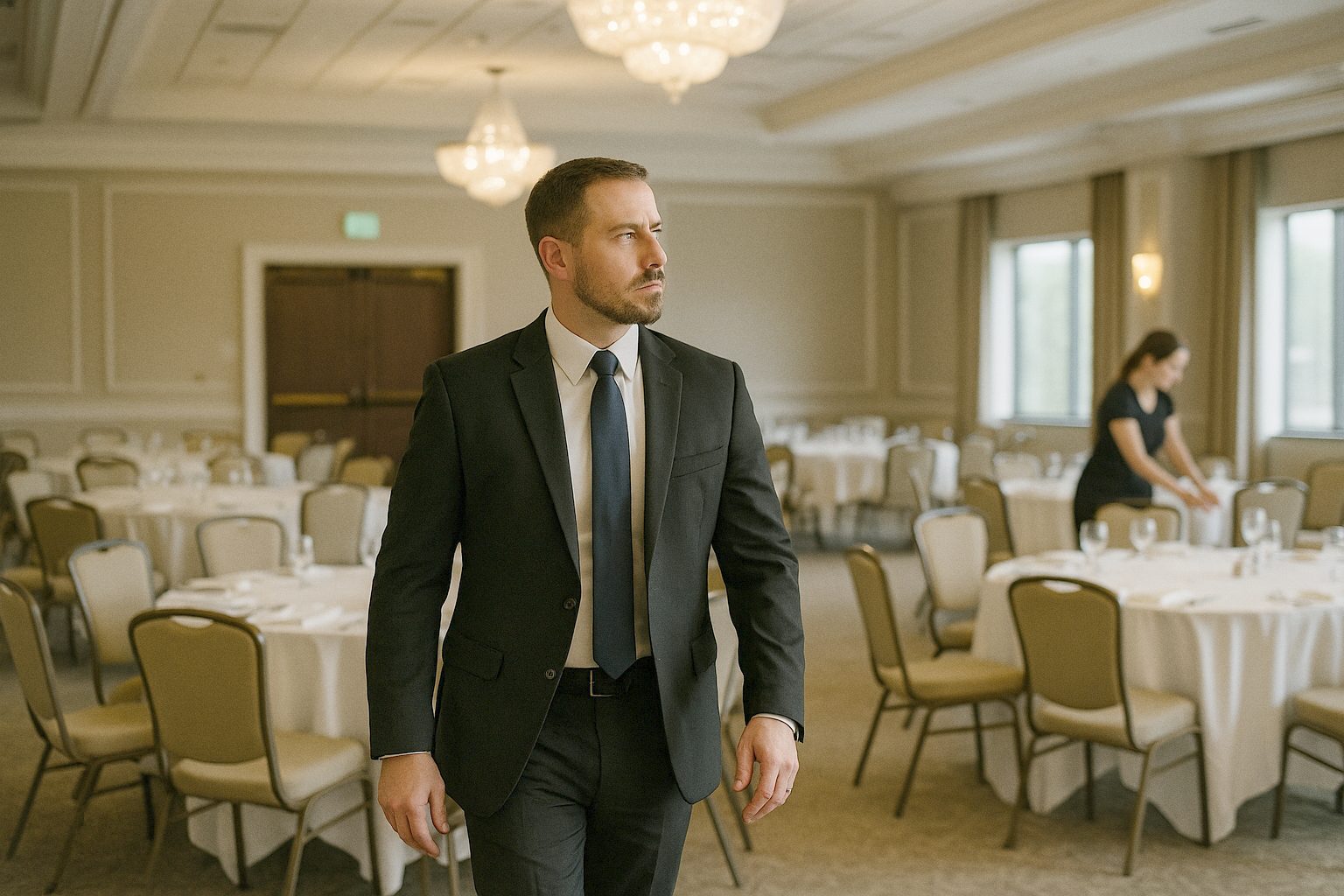
An executive protection advance is the preparation that happens before a principal arrives anywhere: an airport, hotel, office, conference, restaurant or private residence. The advance team, sometimes a single advance agent, researches and coordinates each location in advance so that when the principal arrives, the arrangements are already in place, the right people have been briefed, the medical and emergency options are known and potential problems have been solved quietly beforehand.
In practical terms, an advance answers a simple question for every stop on the itinerary: what needs to be true for the principal to arrive, do what they came to do and leave smoothly and safely? It typically covers arrival and departure arrangements, coordination with venue and hotel management, private spaces, timings, transportation, communications, medical resources and contingency options. The specific findings are confidential, because publishing them would weaken them. What the principal sees is the result: a day that runs calmly and on time.
Advance work is one of the clearest differences between professional executive protection and a basic bodyguard service, as explained in our guide to executive protection vs. bodyguards. This guide explains what an advance involves, why it matters, how it scales and how to judge whether a provider takes it seriously.
Most of the problems that affect a principal's day are predictable: a crowded entrance, a venue that has not been told who is coming, a driver who does not know where to wait, a schedule change that nobody passed on, a medical issue with no plan for where to go. Advance work exists to find and solve those problems before they happen.
The scope of an advance depends on the location and the requirement, but it generally includes the following areas. The details are tailored and confidential, so what follows describes the purpose of each area rather than how it is carried out.
Agreeing where and how the principal will arrive and leave, coordinating with venue staff and drivers so that the principal is not left waiting in public areas, and having alternatives if plans change.
Meeting or speaking with hotel and venue management, security and event teams to agree on access, private areas, room arrangements, timings and how guests or visitors will be handled.
Identifying green rooms, holding rooms, private dining rooms or offices where the principal can prepare, take calls or meet guests away from public view.
Confirming vehicles, drivers, drop-off and pickup points, parking and timings, and making sure transport and venue teams are coordinated. Route planning forms part of this, but those details are never published.
Identifying appropriate hospitals and clinics, confirming first-aid and medical resources at the venue, and understanding how emergencies would be handled at each location.
Checking connectivity, agreeing how the protection team, drivers, venue staff and the principal's office will stay in contact, and planning backups where needed.
Reviewing protective intelligence on the area: planned protests, events, construction, traffic disruption or anything else that could affect the visit.
Thinking through what happens if something changes: a delayed flight, a venue issue, weather, illness or unexpected attention. The goal is to have options ready rather than to improvise.
Not every advance requires someone to travel to the location days beforehand.
The right choice depends on risk, complexity, time and budget.
Advances are usually carried out by experienced protection professionals who understand how a principal moves and what can go wrong. On larger operations, a dedicated advance team works ahead of the principal while a separate close-protection team travels with them. Internationally, advances are often conducted with or by vetted local partners who know the area, language and regulations.
A good advance agent combines planning skills with diplomacy. Much of the work involves building cooperation with hotel managers, event organisers, restaurant staff and drivers, many of whom are being asked to adapt their normal processes.
Advance work should begin as early as the itinerary allows. Typical patterns include:
Short-notice requirements can still be advanced, but with fewer options, which is why early planning improves both quality and cost.
Principals do not usually need to see the full detail of an advance. What they and their office typically receive is:
The detailed advance information is kept confidential within the protection team and shared only with those who need it.
At conferences, an advance coordinates with organisers on entrances, credentials, green rooms, stage timings, media plans and departure. At private investor dinners, it focuses on private rooms, discreet entrances, staff briefings, guest list processes and departure arrangements. In both cases, good advance work is what allows protection to remain unobtrusive while guests focus on networking and conversations.
For more, see our guides to executive protection at conferences and building a security plan for a private investor dinner.
Advance work is one of the cost drivers explained in our executive protection pricing guide. It often pays for itself by preventing disruption, wasted time and reactive costs.
A provider who cannot explain their approach to advance work, or who treats it as optional for every engagement, is unlikely to deliver a professional protective program.
An advance is the preparation of a location before the principal arrives, covering arrival and departure, coordination with venue staff, private spaces, transportation, medical resources, communications and contingencies.
An advance agent researches and coordinates locations ahead of the principal, working with hotels, venues, drivers and hosts so arrangements are ready and potential problems are solved in advance.
No. Many advances are completed remotely through research and coordination. On-site advances are used for higher-profile, higher-risk or more complex locations.
As early as possible once locations are confirmed, with on-site visits for complex venues often a day or more before arrival and final confirmation shortly beforehand.
Because sharing specific arrangements, timings and plans would make them less effective. Only people who need the information receive it.
It adds planning time and sometimes travel, but it often reduces overall cost by preventing disruption, delays and reactive measures.
Yes, but it can be simple. Even a single speaker appearance benefits from remote coordination with the organiser and a clear arrival and departure plan.
An executive protection advance is where most of the real work of protection happens. By preparing every airport, hotel, venue, restaurant and residence before the principal arrives, coordinating with the people who run them and planning for medical needs and contingencies, the advance turns a complex itinerary into a smooth, discreet day. The details stay confidential; the result is visible in how effortlessly everything runs.
For a full introduction, read our complete guide to executive protection. Global Capital Network works with executives, investors and family offices at our investor conferences and private investor dinners worldwide. Through vetted, appropriately licensed security partners, GCN can coordinate advance work and protection for a single event appearance, a full day of movements or complex multi-city and international itineraries. Request a confidential consultation to discuss your requirement.
This article is general information, not legal or security advice. Security, licensing and venue requirements vary by jurisdiction; consult appropriately licensed professionals.
Angel investors, VCs and family offices in one room for one day, with live pitches, exhibitor booths and an evening reception at the Renaissance Newport Beach.
See the event →


.webp)
.png)


.png)