LIVE EVENT
GCN Investor Conference in Newport Beach, CA
MARCH 25 · NEWPORT BEACH, CA

LIVE EVENT





.png)


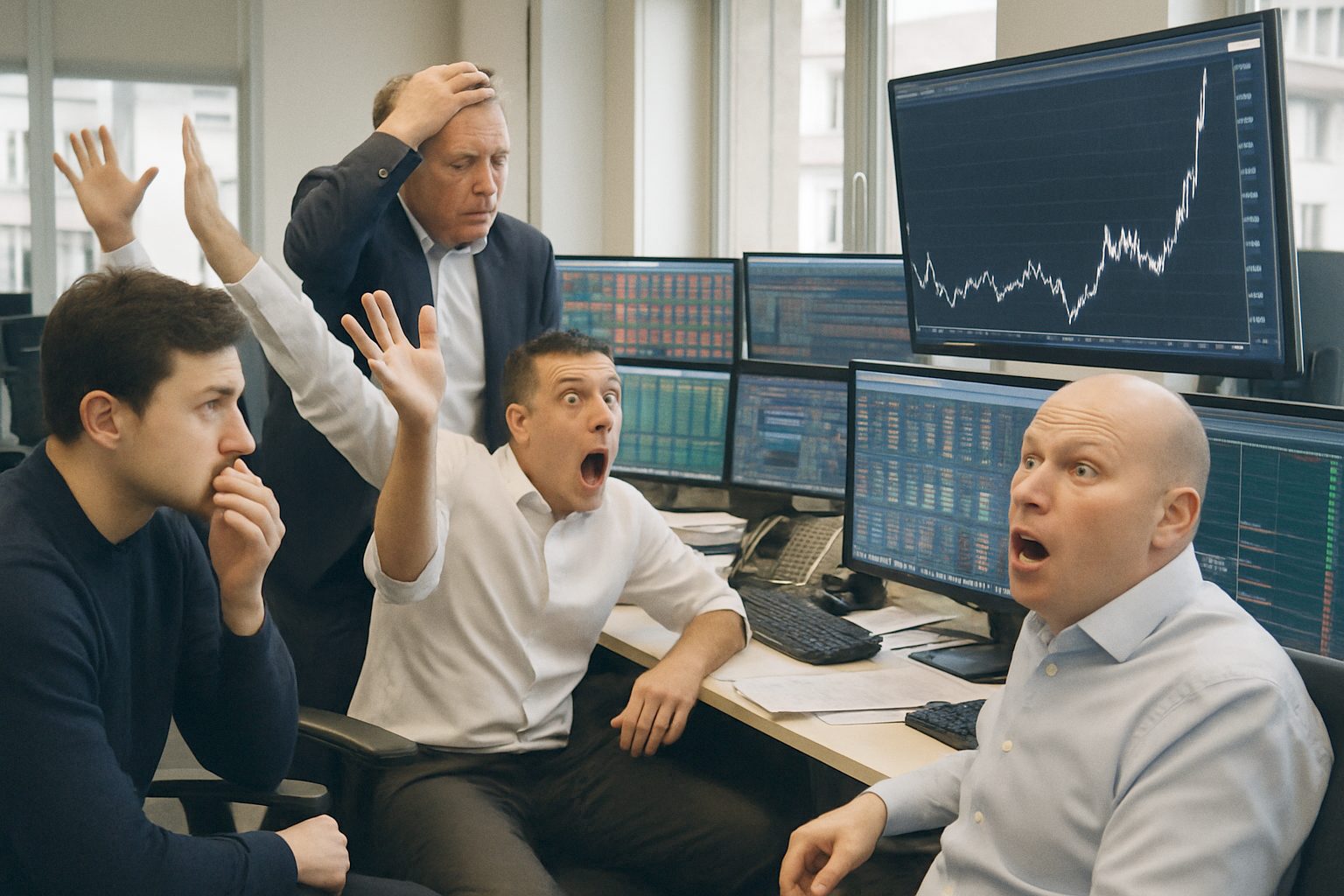
For a few hours in October 2008, in the middle of a global financial crisis, Volkswagen briefly became the most valuable company in the world. Its share price had risen roughly fivefold in two trading days, briefly topping €1,000. The company's cars and profits had not changed. What had changed was the market's understanding of how few VW shares were actually available to trade.
The Volkswagen squeeze remains one of the most dramatic short squeezes in market history. This post-mortem explains how it happened and what it teaches investors about ownership, derivatives and crowded trades.
On Sunday 26 October 2008, Porsche disclosed that it controlled about 74% of VW's ordinary shares: roughly 43% held directly, plus about 31% through cash-settled options. The market had not fully understood the scale of the options position, which had not needed to be disclosed in the same way as direct shareholdings.
Combined with Lower Saxony's stake, that left only a very small free float, far less than the number of shares sold short.
For more on how small floats affect trading, see Arm's 2023 relisting.
A rapid price rise that forces short sellers to buy shares to limit losses, which drives the price even higher.
Porsche's disclosure revealed that very few shares were available to trade, while short sellers needed to buy many more to close their positions.
No. Porsche's debt burden during the financial crisis left it unable to complete the takeover, and Volkswagen later integrated Porsche's car business.
Disclosure rules have tightened, but squeezes still occur whenever heavy short interest meets limited share supply.
The Volkswagen squeeze showed how ownership concentration, hidden derivatives positions and crowded short bets can combine to produce extreme price moves. For investors, the lesson is to understand who really owns a company and how many shares can actually trade before taking a position.
Global Capital Network connects investors across public and private markets through our events and investor network. Get in touch to learn more.
This article is general information, not investment advice. Figures are approximate.


.webp)
.png)


.png)